
Plantar Fasciitis
Plantar fasciitis is one of the most common causes of heel pain we treat at Foot Medic™ Cardiff. The good news is with the right treatment it can be cured.
What is plantar fasciitis?
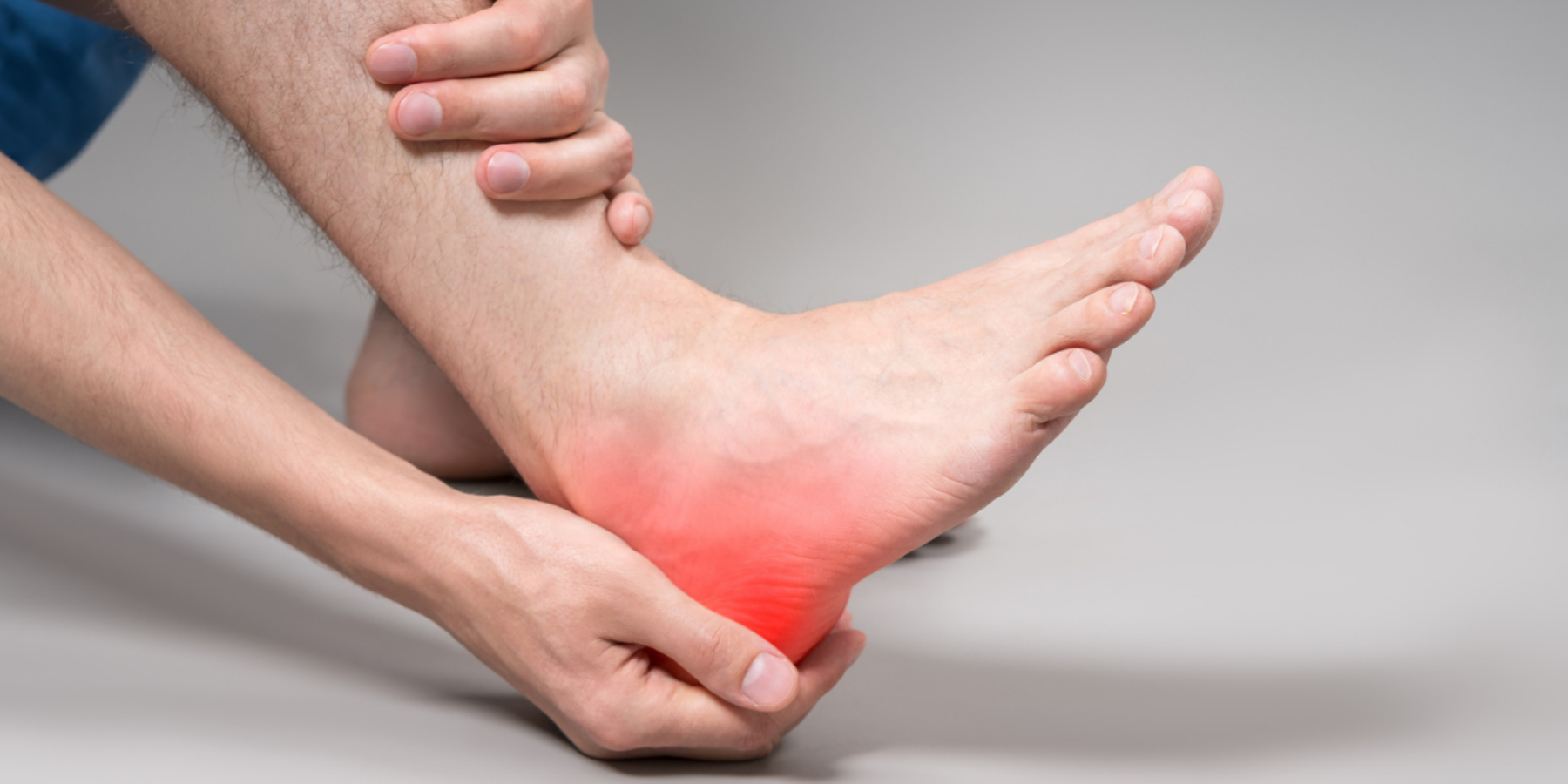
Plantar fasciitis is one of the most common causes of heel pain. If you find yourself wincing with that first step out of bed in the morning, or noticing a sharp ache under your heel after a period of rest, you may be dealing with it right now.
Damian, our lead podiatrist explains condition here.
The plantar fascia is a thick band of tissue that runs along the sole of your foot, connecting your heel bone to your toes. When this tissue becomes irritated or overloaded, it can cause significant pain and discomfort, particularly around the heel.
The good news is that plantar fasciitis responds well to the right treatment. Most people recover fully with the correct care.
To fully understand the cause of plantar fasciitis we recommend a booking a Biomechanical Assessment.
WHY CHOOSE US?

HCPC REGISTERED PODIATRISTS

PRIVATE CONSULTATION

PROFESSIONAL SERVICE

COMPREHENSIVE ASSESSMENT
EVIDENCE BASED TREATMENT
ADVANCED TECHNOLOGY

FULLY INSURED
Why we recommend booking a
Biomechanical Assessment
Treating heel pain without understanding its cause is a bit like fixing a leak without finding where the water is coming from. You might get some relief in the short term, but the problem is likely to return.
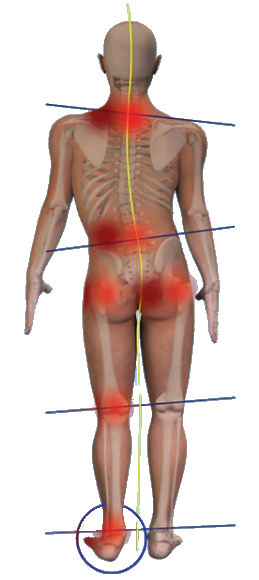
A biomechanical assessment gives us the full picture. We look at how your feet, ankles, legs and posture work together when you stand, walk and move.
This allows us to identify the specific factors placing strain on your plantar fascia, whether that is the way your foot rolls inward, a tight calf muscle, a leg length difference, or something in your footwear or daily routine.
Once we know the cause, we know the best way to treat it.
That means no guesswork, no generic advice and no wasted time on treatments that are not right for your situation. Your treatment plan is built around what your body actually needs.
If you have been struggling with heel pain and want to get to the bottom of it, a biomechanical assessment is the right place to start.
What To Expect At A
Biomechanical Assessment
STEP ONE - History

Our MSK practitioner will take a full medical, activity and symptom history to understand why your pain has developed and why it has persisted.
We discuss when your symptoms started, what makes them worse, previous treatments you have tried, your footwear, work demands, exercise and physical activity.
All information is discussed privately and forms the foundation of a precise treatment plan.
STEP TWO - Assessment
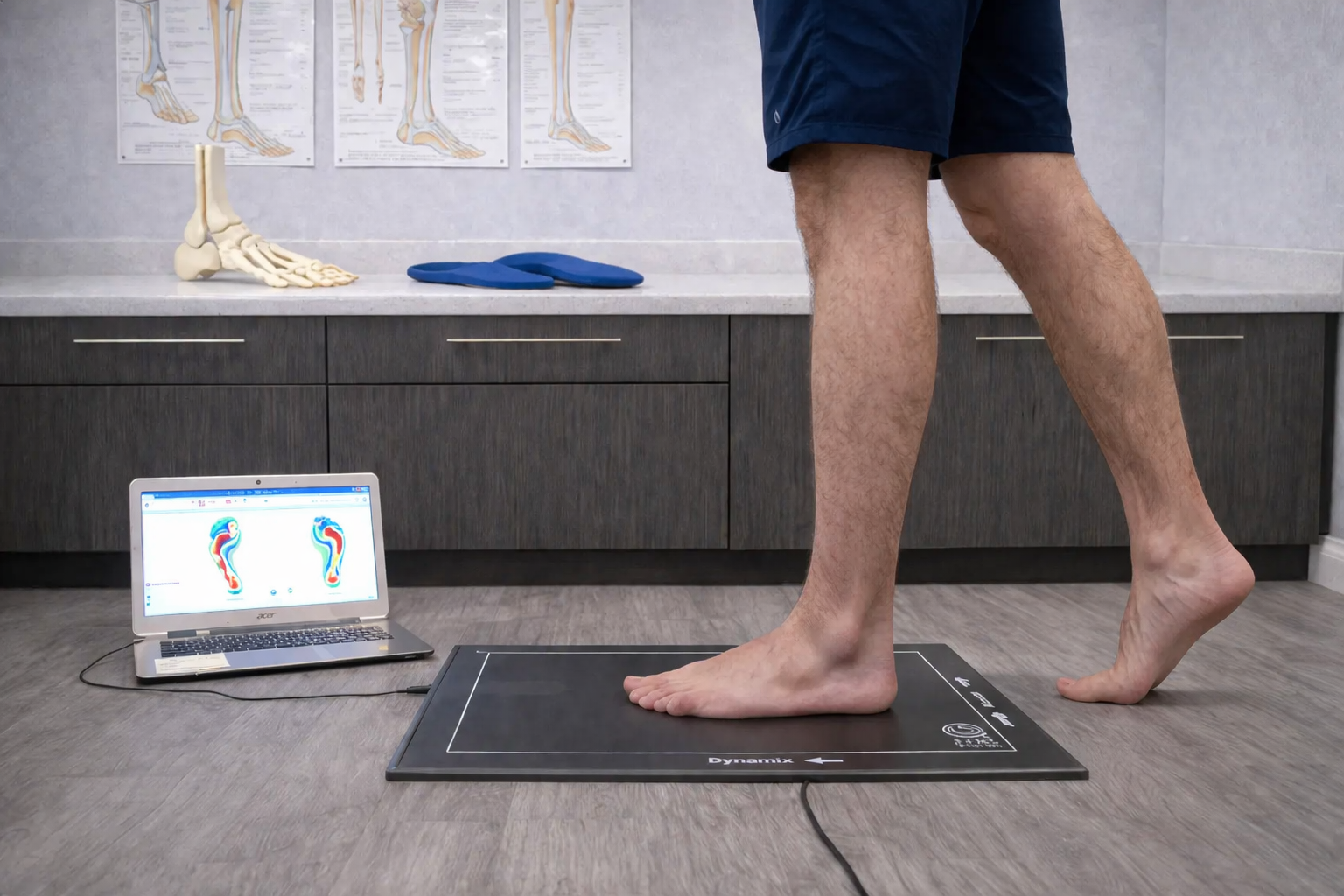
There are three elements to a biomechanical assessment.
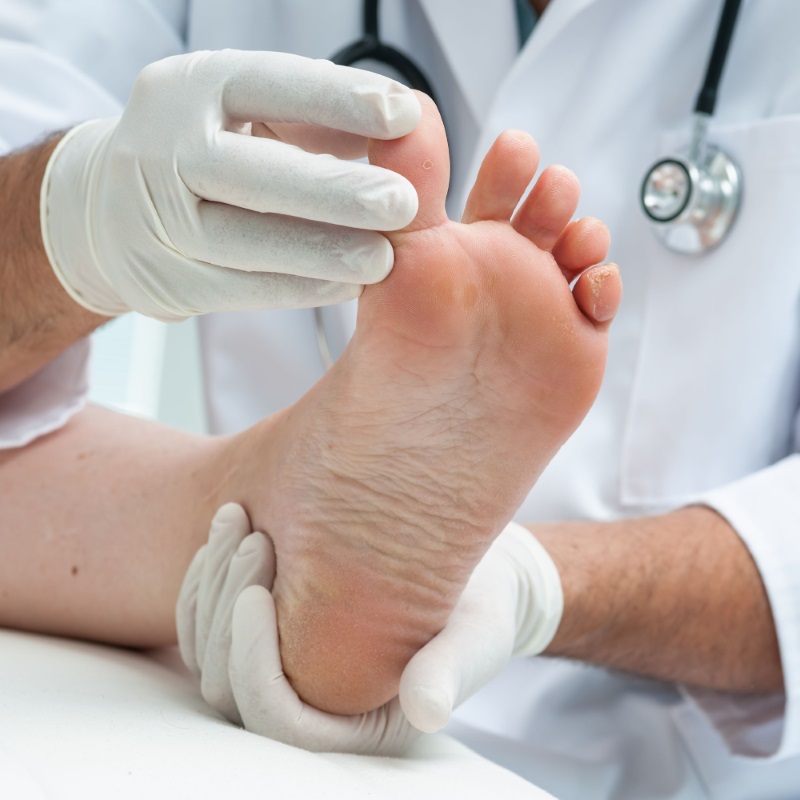
Firstly, we assess the ranges of motion of the main joints of your feet, ankle and lower limbs to assess ‘your normal.’ We then assess your posture to visualise the effect your feet have on your skeletal system when standing.
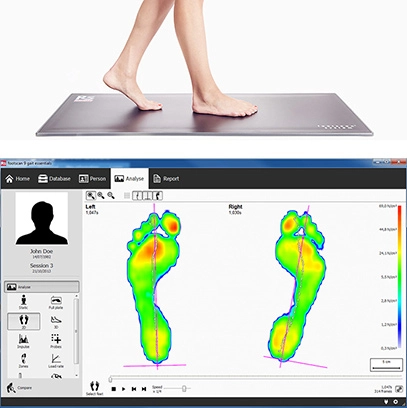
Finally we use 3D Footscan©
technology to analyse your gait (walking / running) and balance.
STEP THREE - Treatment
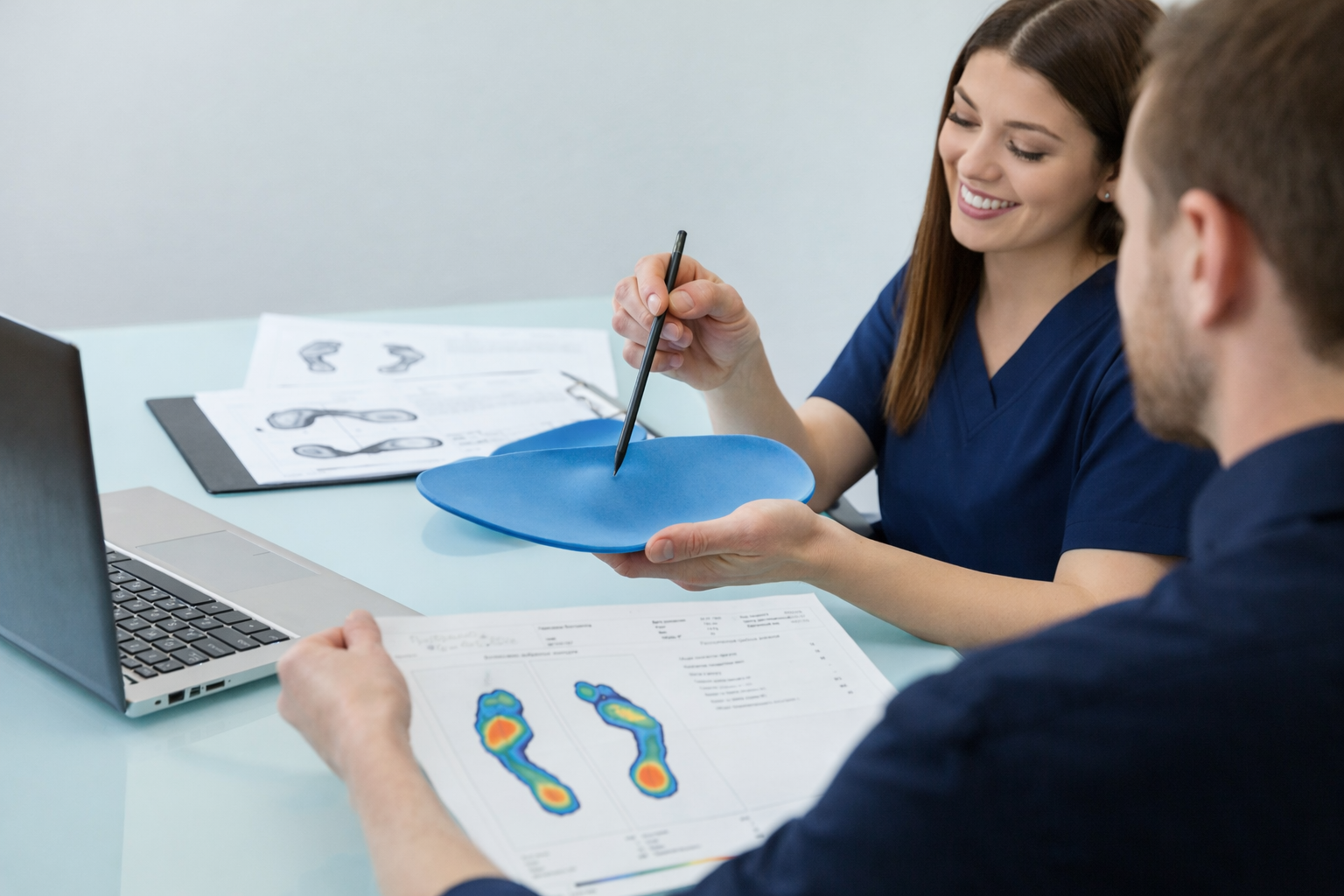
One we have determined the cause of your condition we advise on the most suitable treatment plan to treat the presenting problem and prevent reoccurrence.
Musculoskeletal conditions can be successfully treated by: Modifying lifestyle, sports, footwear; Strengthening & stretching exercises; Orthoses (prescription insoles) that redistribute load and prevent repetitive injury; Shockwave and laser therapy that reduce inflammation and promote healing. We also have pathways for imaging and consultant referrals.
Download our PATIENT Guide to
Plantar Fasciitis
We have created a clear and practical guide to Plantar Fasciitis. Developed by musculoskeletal (MSK) podiatrists, it explains how plantar fasciitis is caused, why it commonly develops, and the most effective ways to manage and treat it. The guide is designed to help you better understand your heel pain, reduce discomfort, improve mobility and support long-term recovery with simple, evidence-based advice.

When a plantar fasciitis treatment is recommended
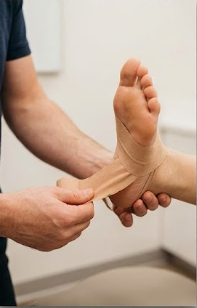
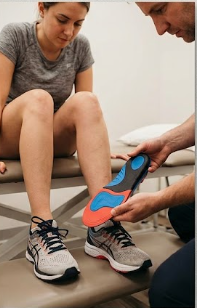
Not every case of heel pain needs immediate clinical intervention, but there are clear situations where professional treatment is the right course of action. We would recommend booking an appointment if any of the following apply to you:
Your pain has lasted longer than four to six weeks — heel pain that does not settle on its own within this timeframe is unlikely to resolve without proper management
Your first steps in the morning are significantly painful — this is a hallmark sign of plantar fasciitis and warrants a proper assessment to confirm the cause and begin treatment
The pain is getting worse over time — a gradual increase in symptoms suggests the tissue is under continued or increasing load and needs to be addressed
Your daily routine is being affected — if heel pain is limiting your walking, changing the way you move, or stopping you from doing things you enjoy, that is reason enough to seek help
You have already tried rest but the pain keeps returning — rest alone rarely resolves the underlying cause, and recurring pain is a sign that something specific is driving the problem
You are an active person or runner — people who exercise regularly are at higher risk of the condition worsening without targeted treatment and load management advice
You have noticed pain in both heels, or in other areas of the foot — symptoms affecting both feet, or spreading beyond the heel, may indicate a broader biomechanical issue that needs professional assessment
You have tried self-treatment without success — if stretching, new footwear or over-the-counter insoles have not made a meaningful difference, it is time to find out why
The earlier treatment begins, the better the outcome tends to be. Most people with plantar fasciitis do not need injections or surgery. With the right plan, a full recovery is very achievable.
If you have questions about our biomechanical assessments, contact us on 0800 999 1886
FOR APPOINTMENTS
Call 0800 999 1886
Or Book Online At Anytime ⤦
Frequently Asked Questions
How much does plantar fasciitis treatment cost? For up-to-date fees, please view our fees page or contact the clinic on 0800 999 1886
Will I need more than one appointment? Generally YES. Our practitioners will carry out a full assessment in a single appointment. If the biomechanical assessment highlights the need for treatment such as a orthoses, shockwave therapy, laser therapy or a steroid injection you will be advised of what would work best at the end of the assessment.
How long is a biomechanical assessment for plantar fasciitis? We generally allow between one and one and a half hours. This gives us enough time to complete all of the relevant tests and build a clear picture of what is causing your heel pain.
Is a biomechanical assessment painful? No. None of the tests we carry out are painful. If you are already experiencing heel pain, we may need to gently palpate or mobilise the affected area to assess the cause, but this is always done with care and consideration.
What should I wear to the appointment?
We advise that you attend in loose legged or 'gym-style' clothing so we can see your body shape below the knee and below.
Should I bring anything to the appointment?
Yes. Please bring the footwear you wear most often, including any shoes you use for walking, work, or exercise. Also if you have any previous reports, scans, or imaging related to your problem, please bring these with you.
Will I get a diagnosis at the appointment?
Yes in most cases we will be able to give you a diagnosis of the condition or conditions we believe is causing the symptom(s). In some cases we may need to refer for imaging (Xray, ultrasound or MRI) if we believe the condition / symptoms warrant further investigation.
Do you also provide treatment for plantar fasciitis? Yes. The purpose of the biomechanical assessment is to identify the cause of your heel pain. Once we know what is driving the problem, we can put together a tailored treatment plan. This may include stretching and strengthening exercises, prescription orthotic insoles to redistribute load and reduce strain on the plantar fascia, shockwave or laser therapy to reduce inflammation and promote healing, and rehabilitation exercises or advice on lifestyle, footwear and activity modification.
testimonials

What patients say about us...

CARDIFF EAST CLINIC
830 Newport Road Rumney Cardiff CF3 4LH
CARDIFF WEST CLINIC
253 Cowbridge Road West Cardiff CF5 5TD
Links
Popular Services
Practice Policies
Socials

© 2026 Foot Medic™ Cardiff
We run on